
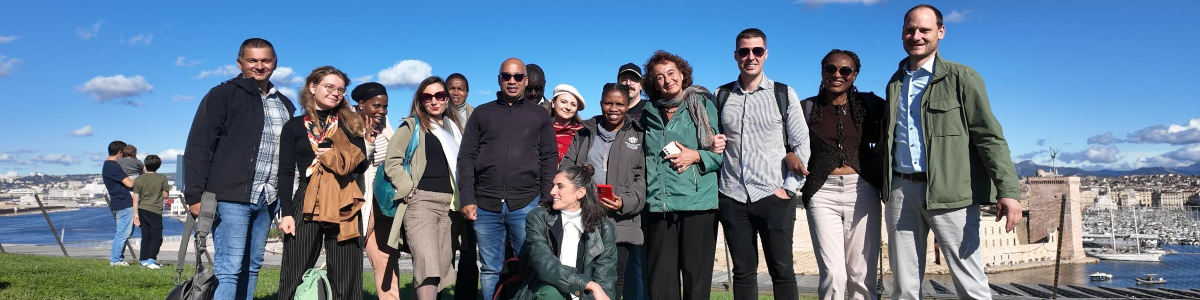
As part of the MASSTER project - Erasmus+ program, Fidelia Ibekwe, Full Professor at EJCAM, is taking part in the development of a MOOC (Massive Open Online Course) on critical thinking and the decolonisation of North/South relations, on the valorisation and preservation of Africa's historical and natural cultural heritage, on the exploitation of local knowledge, on the empowerment of local actors in protecting their environment and ecosystems with a view to sustainable agricultural development.
The MASSTER project (Migration, Agritourism, and Sustainable Solutions for Training and Education in Rural Areas) is part of the Erasmus+ program (Capacity Building) and aims to strengthen relations between higher education, secondary schools and the socio-economic world. It contributes to the sustainability objectives of Senegal and South Africa by promoting economic diversification in rural areas.
The project focuses on the integration of migrants, i.e. on migration and mobility priorities. It combines aspects of rural development linked to life and social sciences in an effort to address brain drain issues and the root causes of irregular migration. The project aims to strengthen cooperation on resolving all migration-related issues that jeopardise the sustainable development of rural areas and food security, while respecting national needs, skills and legal frameworks, and access routes to legal migration opportunities.
Highlights of the MASSTER project
- Interdisciplinary approach: It links agriculture, education, migration and pedagogical innovation.
- Strong local impact: Training and MOOCs directly benefit farmers and students.
- Critical and decolonial dimension: Training in "critical thinking" and the preservation of African cultural heritage is a powerful initiative.
- Broad, international partnership: The involvement of European, African and Balkan institutions encourages the exchange of best practices.
- Focus on managing migratory flows: Addressing the root causes of rural migration and brain drain.
Main objectives
- Support six higher education institutions in Africa to promote sustainable rural development.
- Responding to the needs of farmers by offering income-generating training.
- Helping outreach services and municipalities to better manage migration flows from rural areas.
- Develop and accredit four new training courses focusing on income generation.
- Set up a MOOC on critical thinking and the decolonisation of North/South relations.
- Form educational pairs combining formal and non-formal education to mentor farmers and students.
- Set up a student and alumni tracking system to identify early signs of brain drain.
Expected results
- Better integration of migrants and support in managing rural migration.
- Increased awareness of the environment, cultural heritage and ecosystems.
- Participation of at least 450 students in MOOCs.
- A model of sustainable cooperation between universities, local communities and economic players.
Our partners
- University of Naples Federico II (IT)
- Aix-Marseille University EJCAM
- Academy of South Serbia (RS)
- Academy of professional studies South Serbia
- Western Balkan Institute (Webin)
- Universite Gaston Berger Saint-Louis (SN)
- Universite du Sine Saloum El-Hadj Ibrahima NIASS Kaolack (SN)
- Université Assane Seck De Ziguinchor - UASZ (SN)
- University of Sine Saloum El-Hadj Ibrahima Niass (USSEIN) - USSEIN
- Center interprofessionnel pour la formation aux métiers de l'agriculture Saint Louis (SN)
- University of Free State (SA)
- South African Society for Agricultural Extension University of the Free State (SA)
- Stellenboch University SA
- Tschwane University of Technology SA
Any questions?
For more information on this project, please contact Fidelia Ibekwe, amU/EJCAM project manager:
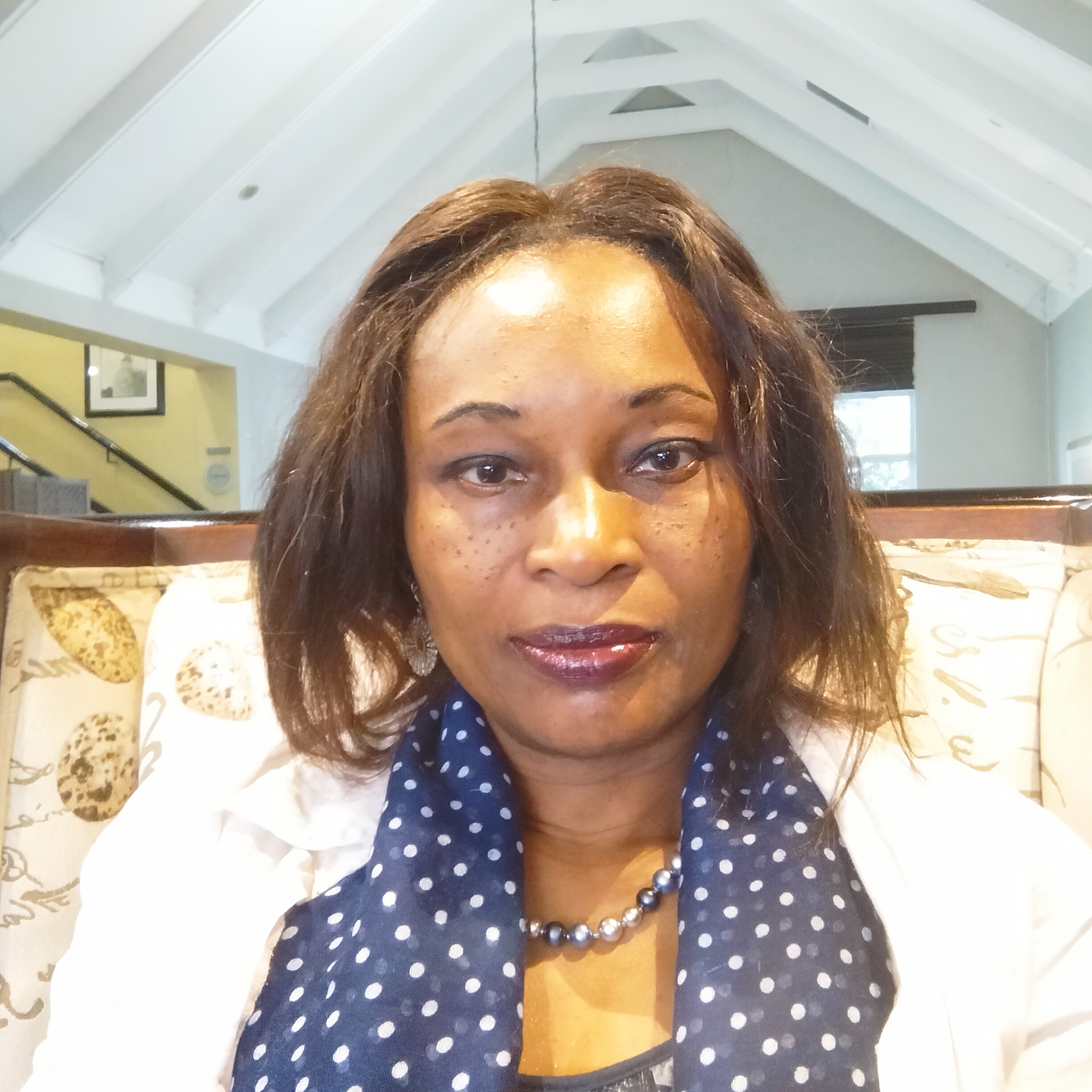
Fidelia Ibekwe is Professor of Information and Communication Sciences at Aix-Marseille University.
Holder of a B.A. (Bachelor of Arts) in Foreign Languages & Litteratures from the University of Port-Harcourt (Nigeria) and a Maîtrise (Master's degree) in Lettres Modernes from the Université Stendhal, Grenoble 3, she pursued a course of study in Information and Communication Sciences (ICS), obtaining a DEA (post-graduate diploma) and then a PhD in ICS from the Université Stendhal, Grenoble 3. She then obtained her Habilitation à Diriger des Recherches en SIC in 2010.
Before joining Aix-Marseille University's School of Journalism and Communication (EJCAM), Fidelia was a lecturer at the University of Nancy 2 (IUTA), then at the University of Lyon 3. From 2007-2009, she was Visiting Research Scholar at the College of Information Science & Technology, University of Drexel, Philadelphia (USA).
Her areas of research:
1. Racism and decolonial studies, critical race theory, algorithmic governance and bias, data colonialism
2. Data processing and visualization (terminology extraction, clustering, text mining, information visualization)
3. Uses of information and communication technologies: impact of Big Data, Open Data and Web 2.0 on science and society
4. Theoretical and epistemological foundations of the scientific method.
Fidelia Ibekwe was a member of the Commission Nationale des Universités (CNU) for the 71st from 2011-2014, and again from 2015-2019. She is an occasional reviewer for A-rank journals including the Canadian Journal of Information Science, Knowledge Organization (Ergon-Verlag), Journal of Applied Ontology (IOS Press), Pattern Recognition Letters (Elsevier), Neurocomputing (Elsevier).
She is a member of several learned societies, including SFSIC (Société Française des Sciences de l'Information et de la Communication), International Society for Knowledge Organization (ISKO) and Association for Information Science & Technology (formerly American Society for Information Science & Technology). She was President of the French Chapter of ISKO from 2009-2011 and a member of the association's executive board at international level. She was President of the European Chapter of ASIST from 2011-2012, with over 100 members from several European countries. She was elected member of the ASIST Executive Board from 2014-2017.
