-
Photo
 Yasmine SellamiFormationFormer Master's student in Journalism, JournalistPromotion2019-2020Yasmine is a freelance journalist. She likes the long view, in-depth investigations and thought-provoking reports. We've read her in Médiapart, Marsactu and Street Press, on subjects close to her heart: gender, migration, cinema... with an eye to France and the Maghreb, and a special focus on Algeria. […] Read morePhoto
Yasmine SellamiFormationFormer Master's student in Journalism, JournalistPromotion2019-2020
Yasmine SellamiFormationFormer Master's student in Journalism, JournalistPromotion2019-2020Yasmine is a freelance journalist. She likes the long view, in-depth investigations and thought-provoking reports. We've read her in Médiapart, Marsactu and Street Press, on subjects close to her heart: gender, migration, cinema... with an eye to France and the Maghreb, and a special focus on Algeria. […] Read morePhoto
Yasmine SellamiFormationFormer Master's student in Journalism, JournalistPromotion2019-2020Yasmine is a freelance journalist. She likes the long view, in-depth investigations and thought-provoking reports. We've read her in Médiapart, Marsactu and Street Press, on subjects close to her heart: gender, migration, cinema... with an eye to France and the Maghreb, and a special focus on Algeria.
Linkedin -
Photo
 Tristan DereuddreFormationFormer Master's student in Journalism, Freelance journalist in French GuianaPromotion2022-2024A graduate of the Journalism Master's program, Tristan Dereuddre worked as an intern for the Politis editorial team (2023-2024) before moving to French Guiana to pursue a multi-media career in print, TV and radio journalism.After a fixed-term contract with France-Antilles / France-Guyane, he worked as a freel […] Read morePhoto
Tristan DereuddreFormationFormer Master's student in Journalism, Freelance journalist in French GuianaPromotion2022-2024
Tristan DereuddreFormationFormer Master's student in Journalism, Freelance journalist in French GuianaPromotion2022-2024A graduate of the Journalism Master's program, Tristan Dereuddre worked as an intern for the Politis editorial team (2023-2024) before moving to French Guiana to pursue a multi-media career in print, TV and radio journalism.After a fixed-term contract with France-Antilles / France-Guyane, he worked as a freel […] Read morePhoto
Tristan DereuddreFormationFormer Master's student in Journalism, Freelance journalist in French GuianaPromotion2022-2024A graduate of the Journalism Master's program, Tristan Dereuddre worked as an intern for the Politis editorial team (2023-2024) before moving to French Guiana to pursue a multi-media career in print, TV and radio journalism.
After a fixed-term contract with France-Antilles / France-Guyane, he worked as a freelance journalist in French Guiana. He quickly made a name for himself: in 2025, he won the Prix Varenne Jeune Journaliste in the regional weekly press category for his investigation into detention conditions at the Rémire-Montjoly prison, published in France-Guyane. This is one of the most prestigious awards in French journalism.
During a visit to EJCAM, we took the opportunity to hear her story.
Produced by Julien Brehelin.
Linkedin -
Photo
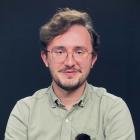 Paul SalekFormationFormer Master's student in Information-Communication, Communication ManagerPromotion2018-2020From the EJCAM to the stages of the Bataclan, from the offices of the Ministry of the Interior to the PACA, Gard and Corsica regions... Paul has charted a course all his own! Today, he uses his communications skills to promote entrepreneurship and social impact at Adie and Passage des Entrepreneuses. Projects […] Read morePhoto
Paul SalekFormationFormer Master's student in Information-Communication, Communication ManagerPromotion2018-2020
Paul SalekFormationFormer Master's student in Information-Communication, Communication ManagerPromotion2018-2020From the EJCAM to the stages of the Bataclan, from the offices of the Ministry of the Interior to the PACA, Gard and Corsica regions... Paul has charted a course all his own! Today, he uses his communications skills to promote entrepreneurship and social impact at Adie and Passage des Entrepreneuses. Projects […] Read morePhoto
Paul SalekFormationFormer Master's student in Information-Communication, Communication ManagerPromotion2018-2020From the EJCAM to the stages of the Bataclan, from the offices of the Ministry of the Interior to the PACA, Gard and Corsica regions... Paul has charted a course all his own! Today, he uses his communications skills to promote entrepreneurship and social impact at Adie and Passage des Entrepreneuses. Projects that make sense, carried out with passion.
Linkedin -
Photo
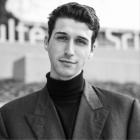 Antoine MarcelFormationFormer Master's student in Organisational Communication, Communications Officer at PsynoviaPromotion2022 - 2024Trained at EJCAM in the subtleties of healthcare organisation communications (M1 Organisational communication in health and healthcare) and press relations (M2 Communication strategies et press relations), Antoine Marcel developed his expertise at Assistance Publique - Hôpitaux de Marseille (APHM), orchestrat […] Read morePhoto
Antoine MarcelFormationFormer Master's student in Organisational Communication, Communications Officer at PsynoviaPromotion2022 - 2024
Antoine MarcelFormationFormer Master's student in Organisational Communication, Communications Officer at PsynoviaPromotion2022 - 2024Trained at EJCAM in the subtleties of healthcare organisation communications (M1 Organisational communication in health and healthcare) and press relations (M2 Communication strategies et press relations), Antoine Marcel developed his expertise at Assistance Publique - Hôpitaux de Marseille (APHM), orchestrat […] Read morePhoto
Antoine MarcelFormationFormer Master's student in Organisational Communication, Communications Officer at PsynoviaPromotion2022 - 2024Trained at EJCAM in the subtleties of healthcare organisation communications (M1 Organisational communication in health and healthcare) and press relations (M2 Communication strategies et press relations), Antoine Marcel developed his expertise at Assistance Publique - Hôpitaux de Marseille (APHM), orchestrating the promotion of medical innovations and managing editorial projects. He is now putting this experience to good use at the NeuroMarseille Institute (Aix Marseille University) as Communications officer.
From EJCAM to NeuroMarseille: Antoine looks back on the key stages of his career in this video.
Video credits: Julien Brehelin
-
Photo
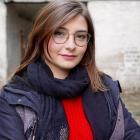 Audrey TravèreFormationFormer Master's student in Journalism, Radio France journalistPromotion2015-2017"Audrey Travère, investigation at heart". This is the title of the portrait produced by Marie Teranne, a student in the Master's program in Journalism, as part of the course taught by David Courbet, journalist and AFP editor at the Marseille office.Audrey Travère is an experienced investigative journalist. Pr […] Read morePhoto
Audrey TravèreFormationFormer Master's student in Journalism, Radio France journalistPromotion2015-2017
Audrey TravèreFormationFormer Master's student in Journalism, Radio France journalistPromotion2015-2017"Audrey Travère, investigation at heart". This is the title of the portrait produced by Marie Teranne, a student in the Master's program in Journalism, as part of the course taught by David Courbet, journalist and AFP editor at the Marseille office.Audrey Travère is an experienced investigative journalist. Pr […] Read morePhoto
Audrey TravèreFormationFormer Master's student in Journalism, Radio France journalistPromotion2015-2017"Audrey Travère, investigation at heart". This is the title of the portrait produced by Marie Teranne, a student in the Master's program in Journalism, as part of the course taught by David Courbet, journalist and AFP editor at the Marseille office.
Audrey Travère is an experienced investigative journalist. Project Pegasus, Cartel, Green Blood... At just thirty years of age, she has already contributed to several international investigations, and today works as a freelancer for Radio France's investigative unit. A passion for investigation that she has nurtured since her student days at the Aix-Marseille School of Journalism and Communication.
By Marie Teranne
"A demanding job that constantly demands energy". That's how Audrey Travère describes investigative journalism. With a bobbed haircut and determined eyes, this investigator, already experienced despite her relative youth (30), sits at a small wooden table in a dark corner of this restaurant in Paris's 13th arrondissement. Dressed in a black turtleneck sweater and jeans, Audrey is leaning against a wall on which hang several photos of journalists from the daily Le Monde. Leaving nothing to chance, it was just a few steps away that the young woman carried out her first investigation six years ago as part of her final-year internship with Le Monde's Décodeurs department. "It was 2017. The election of Emmanuel Macron had reshuffled the political cards, with a lot of new MPs. So we set ourselves the goal of investigating these new entrants to the National Assembly," recalls the journalist, with a smile on her face. "At Le Monde, the journalists were not only talented, but also friendly. The team gave me a very positive image of the kind of professional I wanted to become," adds Audrey.
Audrey discovered this discipline in 2015, during her courses at EJCAM (École de Journalisme et de Communication d'Aix-Marseille): "There was a course [in investigative techniques, editor's note] that I really liked, on the practice of journalism, which requires tenacity and determination", recalls Audrey. Having grown up in Aix-en-Provence, the journalist loved covering current affairs in Marseille during her studies. A city she describes as "incredible", with "turnarounds in every direction, political betrayals, accidents, strikes". But Audrey was also sometimes dissatisfied with making reports or micro-trotters: "I needed to go further, to make longer subjects, to do investigative reporting", she asserts. "There was a time when I was very lacking in self-confidence, and paradoxically I never doubted for a moment that I had to do investigative journalism and that I could do it. (...) I left myself no choice but to succeed," she recalls.
Her intuition proved to be the right one, as in March 2019, Audrey became an investigator with the Forbidden Stories collective, which coordinates an international network taking up the work of threatened, imprisoned or murdered journalists. In July 2021, she investigates the Pegasus project, which reveals the spying by eleven states on journalists, political opponents, human rights activists and heads of state thanks to spyware. "I was searching the database for stories and numbers related to Saudi Arabia, or even the United Arab Emirates. It was a region I knew very little about, so there was a huge amount of documentation to be done," Audrey details.
On a personal level, the journalist manages to defuse the fears linked to insecurity that often accompany the profession of investigator: "At the time of Pegasus, for example, it was an insidious threat that came to our phones, and anyone could be targeted. I said to myself 'if they hack me' and find information, I'll have the French state behind me, but also the support of an entire corporation. (...) I'm not afraid of anything compared to journalists in Mexico, China or Africa," she explains, passionately. After three years with Forbidden Stories, Audrey decided to pursue investigative journalism on the radio: "I knocked on Radio France's door, and they had already established a relationship of trust thanks to Forbidden Stories. I pitched a first investigation, and since then, I've been a freelancer at Radio France", enthuses the freelance journalist.
Linkedin -
Photo
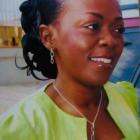 Agnès Kassa GazardFormationPhD in Information and Communication Sciences (ICS)Promotion2012-2017The Marseille School of Journalism and Communication (EJCAM), more than a higher education establishment, is first and foremost a welcoming environment, a place where students can express their passion and creativity, a place where they can surpass themselves. I found my place here in September 2007, alo […] Read morePhoto
Agnès Kassa GazardFormationPhD in Information and Communication Sciences (ICS)Promotion2012-2017
Agnès Kassa GazardFormationPhD in Information and Communication Sciences (ICS)Promotion2012-2017The Marseille School of Journalism and Communication (EJCAM), more than a higher education establishment, is first and foremost a welcoming environment, a place where students can express their passion and creativity, a place where they can surpass themselves. I found my place here in September 2007, alo […] Read morePhoto
Agnès Kassa GazardFormationPhD in Information and Communication Sciences (ICS)Promotion2012-2017The Marseille School of Journalism and Communication (EJCAM), more than a higher education establishment, is first and foremost a welcoming environment, a place where students can express their passion and creativity, a place where they can surpass themselves.
I found my place here in September 2007, alongside other students who were both curious and supportive, open-minded and just as caring as the teaching and administrative staff.
I was keen to capitalise on my professional experience, particularly in the field of communications, having learned a lot by doing as a press attaché and communications officer. I wanted to gain "legitimacy", thanks to a diploma, which is very francophone...
The Master 2 in Media, Health and Communication was the closest to the path I wanted to follow.
EJCAM's SIC research laboratory (IMSIC since IRSIC merged with Toulon's I3M) is a real opportunity to study and understand, among other things, socio-technical mutations.
The teachers-researchers and members of the laboratory have provided me with rigorous and benevolent support, always ready to share their expertise and guide my research.
Their support has been an essential driving force in the progress of my work, enabling me to develop an in-depth analysis of communication strategies adapted to the context of HIV/AIDS in sub-Saharan Africa.
I seized the opportunity to join IRSIC (which was still IRSIC at the start of my thesis), with the support of Professor Dominique BOURGEOIS, who offered to supervise me after having helped me defend my Master 2. Why not become a teacher-researcher? It offers the dual advantage of passing on knowledge while traveling the world.
After 5 years of hard work in my research field, Benin, where I also held the position of chargé de mission to the Minister of Health (because I financed my work with my own funds), I defended my thesis on the theme: "A thesis which, I hope, will make a modest contribution to improving public health communication strategies, particularly in the specific context of Benin and sub-Saharan Africa.
I have to say that the doctoral adventure is both rich and lonely, and the risk of giving up is great, especially in the research conditions I've been working in. Fortunately, Professor Emeritus Jean-Baptiste LESOURD, who took over the direction of my thesis after Professor BOURGEOIS's secondment to Freiburg, was there, present, benevolent, encouraging me right up to the defense in 2017.
After a few years working at a "low" rate - which is also the risk for PhD holders (too expensive, and not always welcome) - I took the competitive examination for the French civil service, and since September 2023, I've been working as a project manager. I belong to the "Conseillers d'Education Populaire et de Jeunesse" (CEPJ) body. My missions are quite varied, involving both the deployment of public youth policies and support for associative structures and other players in my area.
I have great respect and gratitude for this school, which has been a real pillar in my academic career. For me, EJCAM embodies academic excellence focused on people, and I highly recommend it to anyone wishing to train in the fields of journalism and communications.
-
Photo
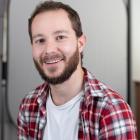 Erwin CanardFormationMaster of JournalismPromotion2010-2012If names could predict a profession, Erwin Canard, journalist, would be the perfect embodiment. This young journalist at AEF Info (a media outlet specialising in education) boasts his unique surname on his Twitter account and on his former freelance blog, soberly entitled "Le Canard de l'Education". A sense o […] Read morePhoto
Erwin CanardFormationMaster of JournalismPromotion2010-2012
Erwin CanardFormationMaster of JournalismPromotion2010-2012If names could predict a profession, Erwin Canard, journalist, would be the perfect embodiment. This young journalist at AEF Info (a media outlet specialising in education) boasts his unique surname on his Twitter account and on his former freelance blog, soberly entitled "Le Canard de l'Education". A sense o […] Read morePhoto
Erwin CanardFormationMaster of JournalismPromotion2010-2012If names could predict a profession, Erwin Canard, journalist, would be the perfect embodiment. This young journalist at AEF Info (a media outlet specialising in education) boasts his unique surname on his Twitter account and on his former freelance blog, soberly entitled "Le Canard de l'Education". A sense of humour and good humour, attested to by one of his friends who describes him as "a joker, very funny". A temperament that may have helped him cope with the tragic events that plunged the world of education into mourning in October 2023 and 2020. The deaths of Dominique Bernard and Samuel Patty, teachers murdered by religious extremists, which Erwin had to cover for his media, left a deep impression on him. Gathering the testimonies of those involved "the anguish, the sadness, the fear... it was very hard", he confides.
When the personality questions come up during the interview, a silence and then a chuckle escape from the phone. You can tell there's an awkwardness that Erwin's best friend, Eddy, confirms: "He doesn't really like talking about himself. But once you've managed to break through his shell, he's someone who always has something to say, who takes care of others [...] it's good to have him around". Erwin Canard, now 34 years old, has no problem talking about the origins of his vocation as a journalist, a profession he has been considering since he was a child. An initial short article about his football club in the local weekly Le Patriote Beaujolais in Villefranche-sur-Saône, during his third-year work placement, confirmed his desire to become a sports journalist. A sportsman as a child, he also wanted to be a professional footballer, but he admits, laughing, that he soon realised that "his abilities weren't going to allow it". But his dream was not entirely dashed, as he ended up captaining of the EJCM (now EJCAM) football team in 2012, during his second year of the master's degree in journalism.
Before joining the Marseille-based school in 2010, Erwin did a degree in political science in Lyon. In his own words, it was an experience that "politicised" him, even though he was perhaps already a little politicised at home. "I come from a working class background and my family were quite keen to defend the working class, the poorest people". His interest in politics gradually outstripped his interest in sport. This transition also took place during his Masters at EJCAM, where in his first year he did a placement in the communications department of Olympique Lyonnais. "We were encouraged to do a placement in communications to see how things worked and who we'd be dealing with during our careers" he explains. At the end of his Master's degree, he took up an internship at L'Humanité in May 2012. The presidential election in particular gave him a great deal of responsibility: "It was great, I did some big articles that my trainee status shouldn't have allowed me to do", he recalls.
Originally from the north of Lyon, Erwin has fond memories of his life in Marseille and his training at EJCAM. He was more impressed by the practical courses than the theory: "I really loved radio, I did a special radio course, and I have fond memories of the quality of the courses and the speakers. On the other hand, I hated TV, both in front of and behind the camera, I found it very difficult technically". After school, it wasn't in TV or radio that Erwin pursued his career, but in the print and web media. This makes sense for someone who spends a great deal of his spare time - apart from hiking in the fresh air or visiting Parisian exhibitions - writing and, above all, reading. According to his friend Eddy, he knows Victor Hugo's bibliography "almost by heart".
When he left school, he had a "traumatic experience" working for nine months in the news department of Le Progrès in Lyon, "it wasn't for me, doing the rounds every morning gave me a lot of anxiety". It even led him to turn down a permanent contract. He then went freelance and chose a speciality to make a name for himself: education. It was a strategy that paid off, as small specialist magazines quickly put their trust in him, and opened the doors to large editorial offices such as L'Etudiant and Le Monde. "It was a very fulfilling time professionally, but financially it was complicated," he admits.
After three years of freelance work, he finally signed a permanent contract in 2018 in Paris with AEF, a news agency for professionals, where he still thrives today. This is a media company whose first subscriber, the Ministry of Education, is also its first contact. This is a particularity that Erwin keeps in mind, even though he says he "never shies away from writing critical articles" about the Ministry. It's a job that's not so far removed from the politics that made him such a dreamer: "It's very political, with the reform aspect of national education. I talk to the main players in this field, to people in high places, it's very interesting. What he misses: "reporting from the field with 'normal' people. As the media is aimed at decision-makers, we only get the decision-makers to talk. We'd gain a lot by getting everyone to talk".
Eléonore Richard
Photo credit: Maxime Montabord
Linkedin -
Photo
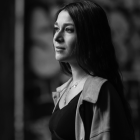 Lisa DomanechFormationL3 Info-ComPromotion2016-2018"After a preparatory school in the literary section, I naturally headed for the Info-Communication degree offered by EJCAM in Aix-en-Provence, with the ambition of becoming a journalist. This year was a rich learning experience, as I discovered the world of the media and advertising, all the more so with the […] Read morePhoto
Lisa DomanechFormationL3 Info-ComPromotion2016-2018
Lisa DomanechFormationL3 Info-ComPromotion2016-2018"After a preparatory school in the literary section, I naturally headed for the Info-Communication degree offered by EJCAM in Aix-en-Provence, with the ambition of becoming a journalist. This year was a rich learning experience, as I discovered the world of the media and advertising, all the more so with the […] Read morePhoto
Lisa DomanechFormationL3 Info-ComPromotion2016-2018"After a preparatory school in the literary section, I naturally headed for the Info-Communication degree offered by EJCAM in Aix-en-Provence, with the ambition of becoming a journalist. This year was a rich learning experience, as I discovered the world of the media and advertising, all the more so with the end-of-year internship I chose to do at the local Marseilles office of the newspaper La Provence.
Following this experience, I moved on to Made in Marseille, the region's leading pure player, where I was in charge of articles, videos and social networks. I then returned to La Provence, where I'm now an editor.
What I remember most about my time at EJCAM was the dynamic impetus provided by some of the teachers, who didn't hesitate to get us to go off the beaten track and work on our creative side. That still helps me every day.
Crédit photo : Frédéric Speich
Linkedin -
Photo
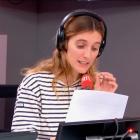 Solène LerouxFormationMaster of JournalismPromotion2018-2021Solène Leroux: "Since the beginning, I've taken the side roads", is the title of the portrait created by Manoa Debande, a Master degree journalism/alternance 1st year student, as part of the course taught by David Courbet, Journalist - AFP Editor at the Marseille office.Since September 2023, Solène Leroux has […] Read morePhoto
Solène LerouxFormationMaster of JournalismPromotion2018-2021
Solène LerouxFormationMaster of JournalismPromotion2018-2021Solène Leroux: "Since the beginning, I've taken the side roads", is the title of the portrait created by Manoa Debande, a Master degree journalism/alternance 1st year student, as part of the course taught by David Courbet, Journalist - AFP Editor at the Marseille office.Since September 2023, Solène Leroux has […] Read morePhoto
Solène LerouxFormationMaster of JournalismPromotion2018-2021Solène Leroux: "Since the beginning, I've taken the side roads", is the title of the portrait created by Manoa Debande, a Master degree journalism/alternance 1st year student, as part of the course taught by David Courbet, Journalist - AFP Editor at the Marseille office
Since September 2023, Solène Leroux has been working for the "RMC s'engage avec vous". Portrait of a determined journalist who has been in love with radio since she was a child."If someone had told me a year ago that I would be working at RMC, I would have laughed. And yet, here Solène Leroux is, five days a week since September, in the offices of RMC.
The journalist works for "RMC s'engage avec vous". Every morning at 6:30, the journalist highlights a problem encountered by listeners, and Solène Leroux finds solutions. "It's a long-term project, which is quite rare in the audiovisual media", she admits.
Behind the three-minute on-air chronicle lies a great deal of investigative work. "Listeners contact us to present their personal problems, or they present themselves as alert launcher. We select the stories, make in-depth enquiries, get in touch with them, and set up the filming and editing," she explains. "Not forgetting the work on the contradictory statements, the file we build on the case. At the very least, it lasts a week, but I've been known to stay on a case for a month."
This was the case for his investigation into the evangelical church Assemblée chrétienne pour l'évangélisation et le réveil (ACER), his "greatest pride". This work enabled her to uncover the testimonies of former members of the congregation who spoke of sectarian aberrations, and thus to reveal these facts to Miviludes, the state body responsible for combating sects, which subsequently brought the case to court.
A PRIVILEGED RELATIONSHIP WITH THE AUDIENCE
It's a long-term job, but one that is proving highly stimulating for this journalist from Palaiseau, in the Essonne region. Her top priority? Contact with listeners, whom she meets every day alongside Amélie Rosique, who is none other than her former teacher at the Marseille School of Journalism and communication.
"I know people who have given up journalism because, generally speaking, there's a loss of meaning. I don't have that feeling, because I'm in contact with listeners, I can see directly the impact of my work on their daily lives and, in a way, I'm fighting for them, to solve their problems." As she points out, it's quite unusual, in a national media outlet, to enjoy such proximity with the public.
But there's something else. Something to do with her temperament. A self-described conscientious person, she doesn't "do things by halves", and certainly not by chance. In the two years since leaving school, she has plunged headlong into
RADIO, HER FIRST LOVE
Her first job was freelancing for FranceInfo, a way of life that was good for her freedom, but also double-edged: "They give you work, so you think I can't say no, so I do too much. Navigating between the web and radio, her lifelong love, she was spotted by Europe 1, "my radio station of choice, as Pauline Amiel [director of the Marseille School of Journalism, editor's note] can attest!
At the same time, she got back in touch with RFI, the radio station that had taken her on as an intern. It was at this point that she decided to earn her living entirely from her voice. I think that school prepared us a little too much for precariousness: I thought that it was inaccessible to do radio exclusively on leaving school," she sighs, "I have the impression that the possibilities were somewhat reduced, and, on our side, there was a form of self-censorship."
After her intershipt at RFI, where she presented the world news, she knocked on every radio door: RTL, RMC... And in the end, her stubbornness paid off.
" SEEK OUT INFORMATION, WHATEVER THE COST".For her, "everything is planned: from the start, I've taken the side roads! Ever since she was a little girl, journalism has been an obvious choice. "The first thing that struck me about journalism was the 9/11 attacks," she recalls. At the age of seven, she was confronted by her mother, who forbade her to watch television because "something serious had happened".
It was on that fateful and famous date that she understood: "I love knowing everything, understanding everything, I love looking for information and finding it, whatever the cost". Years later, the self-described "far from studious" undertook five years of history studies at the Sorbonne, before being parachuted in 2018 for two years of journalism studies in her "second home", Marseille.
She still has vivid memories of her arrival: "That day, OM were in the Champions League, there was noise all night... in short, a mess! And the next day was competition day," she smiles, with a touch of nostalgia. -
Photo
 Yanis BoudaouchFormationL3 and Master CCN-CPromotion2013-2016In 2013, I joined EJCAM in the 3rd year of the information-communication bachelor's degree program in Aix-en-Provence.This course gave me the grounding I needed to choose between the various master's programs offered by EJCAM.At the end of the year, I decided to go for a master's degree in communication strat […] Read morePhoto
Yanis BoudaouchFormationL3 and Master CCN-CPromotion2013-2016
Yanis BoudaouchFormationL3 and Master CCN-CPromotion2013-2016In 2013, I joined EJCAM in the 3rd year of the information-communication bachelor's degree program in Aix-en-Provence.This course gave me the grounding I needed to choose between the various master's programs offered by EJCAM.At the end of the year, I decided to go for a master's degree in communication strat […] Read morePhoto
Yanis BoudaouchFormationL3 and Master CCN-CPromotion2013-2016In 2013, I joined EJCAM in the 3rd year of the information-communication bachelor's degree program in Aix-en-Provence.
This course gave me the grounding I needed to choose between the various master's programs offered by EJCAM.
At the end of the year, I decided to go for a master's degree in communication strategy, again at EJCAM.
During my two years at EJCAM, I worked on a number of communication-related projects in teams (web, public relations, events, etc.).
All these projects helped me to gain a 360° vision of communication and gave me the tools I needed to build my professional project.I was also lucky enough to be able to go on a 4-month university exchange to Montreal, at a partner university, UQAM.
During this exchange, I obtained a Bachelor's degree in Communication and New Digital Media.My studies at EJCAM and this bachelor's degree enabled me to refine my professional project by focusing on media and digital.
Today, after spending more than six and a half years in a media agency, I'm in charge of media and acquisition for Compagnie des Alpes (Parc Astérix, Futuroscope, etc.).If you're looking to learn about 360° communication and take part in a wide range of stimulating projects as part of a team, I recommend EJCAM!
Linkedin -
Photo
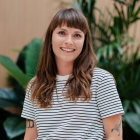 Marion HaeringFormationMaster CCNCPromotion2016-2018"Born in Marseille and having a real passion for communication studies, EJCAM was an obvious choice for me. After graduating with a degree in marketing and communication, I decided to pursue a Master 2 degree in Information-Communication at EJCAM, specialising in CCN-C (Communication and Digital Content, spec […] Read morePhoto
Marion HaeringFormationMaster CCNCPromotion2016-2018
Marion HaeringFormationMaster CCNCPromotion2016-2018"Born in Marseille and having a real passion for communication studies, EJCAM was an obvious choice for me. After graduating with a degree in marketing and communication, I decided to pursue a Master 2 degree in Information-Communication at EJCAM, specialising in CCN-C (Communication and Digital Content, spec […] Read morePhoto
Marion HaeringFormationMaster CCNCPromotion2016-2018"Born in Marseille and having a real passion for communication studies, EJCAM was an obvious choice for me. After graduating with a degree in marketing and communication, I decided to pursue a Master 2 degree in Information-Communication at EJCAM, specialising in CCN-C (Communication and Digital Content, specialisation in Communication).
During my course, I had the opportunity to organise with 6 other students the " La Com' à l'Honneur " event, a conference created by and for EJCAMs' students, held every year at the school. We managed this event from A to Z: choosing the theme (Influence Marketing), the speakers, developing partnerships (financial and logistical), drawing up a communication strategy and managing the entire event on D-day. We produced posters, web banners, social networking banners and flyers for the big day. We also set up a Facebook live stream so that people outside EJCAM could follow the conference. Organising this event enabled us to apply our knowledge of project management and communications, and to develop our ability to work as a team and manage our stress.
After graduating in 2018, I became a communication's and event's project manager! For the past 5 years, I've been in charge of organising a national competition on the theme of tech and disability. I'm in charge of the promotional aspect, with the implementation of a communication strategy, social network management, media relations and partnership development. I'm also in charge of all phases of the event, from the call for projects to the jury stages, the finalists' pitches and the awards ceremony.
So, my two years at EJCAM have been a rich learning experience! In addition to the organisation of the event "Com à l'Honneur", the quality of the courses offered, the availability of the teachers, the small class sizes, the possibility of doing internships, the group projects and the immersion projects within companies... All this gave me the keys to serenely enter professional life.So, if you're passionate about communications (or journalism for that matter), and you're looking for a course that offers a solid foundation of communications knowledge/skills and opportunities for development, go for it with your eyes closed!"
-
Photo
 Jean-Marie LeforestierFormationMaster degree JournalismPromotion2009-2011Jean-Marie Leforestier, the probity of facts and the rigor of investigation. It's the title of the portrait drawn up by Camille Micaelli, a student in the Journalism Master's program, as part of the course given by David Courbet, Journalist - AFP Editor at the Marseille office.Editor-in-chief of Marsactu sinc […] Read morePhoto
Jean-Marie LeforestierFormationMaster degree JournalismPromotion2009-2011
Jean-Marie LeforestierFormationMaster degree JournalismPromotion2009-2011Jean-Marie Leforestier, the probity of facts and the rigor of investigation. It's the title of the portrait drawn up by Camille Micaelli, a student in the Journalism Master's program, as part of the course given by David Courbet, Journalist - AFP Editor at the Marseille office.Editor-in-chief of Marsactu sinc […] Read morePhoto
Jean-Marie LeforestierFormationMaster degree JournalismPromotion2009-2011Jean-Marie Leforestier, the probity of facts and the rigor of investigation. It's the title of the portrait drawn up by Camille Micaelli, a student in the Journalism Master's program, as part of the course given by David Courbet, Journalist - AFP Editor at the Marseille office
Editor-in-chief of Marsactu since 2021, Jean-Marie Leforestier is the discreet face of local investigation in Marseille. Here's a look back at the career of this EJCAM alumnus.
Jean-Marie Leforestier stands quietly in the hallway of the School of Journalisme and of Communication of Aix-Marseille, amidst revision rooms and a temperamental coffee machine. The bearded journalist gives rarely an interview.
Ironically, he's unaware that the window opposite him proudly displays a number of trophies, including one in particular, a symbol of his student days. "Inter-school tournament, 2009". The engraving evokes glory, but not the twists and turns behind such a victory. Smiling, the journalist confides that he founded the school's soccer club the year he arrived, in 2009, and that he suffered a double fracture during the following year's tournament. He keeps that smile throughout an exchange rich in memories, undoubtedly awakened by the walls of a school he has been close to. Graduating in 2011, he has since swapped his student cap for that of a professor who has just finished his day of rigorously teaching the practice of investigation.
It's hard to find a better client to talk to about investigation, the DNA of his journalistic practice. Already experienced at Ouest-France before joining the school, after graduating he began his career at Ravi, a satirical investigative newspaper in the Provence-Alpes-Côte d'Azur region. A year later, in January 2012, he joined Marsactu. This pure player specialising in local investigation has, in the space of a decade, carved out a place for itself in a media space dominated by La Provence. Its investigations into substandard housing prior to the rue d'Aubagne tragedy had subsequently propelled the title to national prominence. In 2015, the editorial team saved the paper from bankruptcy by buying it out. Behind this rescue lies a radical change in business model. At a time when Mediapart was emerging on the national scene, the subscription model was the obvious choice. It enabled the newspaper to free itself from a major lever of pressure, advertising, which had hitherto hindered it.
Although he is not fond of militant journalism, Jean-Marie Leforestier does not deny his convictions. The strongest of these is that he is not financed by the subjects he covers. Even as a student, he found it hard not to "question the frameworks into which he was asked to fit". It's a mentality that sums up the credo of Marsactu, the "local democratic watchdog" of which he is now, at 36, editor-in-chief.
On a daily basis, he leads a team of eight permanent journalists, including himself, as well as a number of freelancers. A common spirit runs through the editorial team: a taste for public affairs, which he has personally cultivated for as long as he can remember. "We must always remember that we're here first and foremost to dissect facts rather than relay opinions," he says in a soft voice. But this work, he realises, comes at a price. "It's a fascinating and rewarding life, but extremely time-consuming". As a young father, he realises the difference that sometimes separates him from those around him because of his schedule. It also takes time to investigate, a practice that requires patience, rigor and a substantial personal investment. "It's essential at a time when media space is saturated by the immediacy of 24-hour news channels.
Marsactu was built on the original color of journalism, which must be "the primacy of facts in the exercise of the profession". The long investigation allows us to pause for a moment, which is beneficial for deciphering the news and for the readers who will benefit from it.
Outside his job, he has no passion for "electric trains", nor any attraction for "weird things". The son of a nurse working with the underprivileged and a computer technician, he remembers that there were hardly any newspapers in his Breton home. Contrary to popular belief, as a child he likes Thierry Roland than Tintin. He sums up his "childhood influences" as his special relationship with television, and sports journalism to be precise. At the age of "four or five", Jean-Marie used to turn his father's screwdriver upside down, like a microphone, to comment soccer matches on television. He has a smile on his face when he recalls this memory. He didn't end up following the career of Didier Roustan, his idol at the time, but admits that sports journalism was his "gateway" to his future profession, without ever having practiced it in this way.
Camille MICAELLI


©2026 - Aix-Marseille Université